
Want to bring more greenery into your home but worried about keeping plants alive? You’re not alone. Many beginners hesitate to start an indoor garden because they think houseplants need constant attention, plenty of sunlight and complicated care routines.
The truth is that choosing the right plants makes all the difference.
Some indoor plants are naturally more adaptable, tolerate lower-light conditions and don’t need frequent watering. With a little understanding of their requirements, you can create a beautiful indoor garden even if you have a busy schedule or limited space.
Whether you live in an apartment, have a small balcony or want to add greenery to your living room, this guide will help you choose and care for beginner-friendly indoor plants.
1. What Makes a Good Indoor Plant?
Not every plant is suitable for every home. Before choosing your indoor plants, consider these factors:
Light requirements: Choose plants that match the natural light available in your room.
Watering needs: Beginners may find plants that tolerate occasional missed watering easier to manage.
Maintenance: Look for plants that don’t require frequent pruning or complicated care.
Available space: Consider whether you need tabletop plants, hanging plants or larger floor plants.
Indoor conditions: Temperature, humidity and ventilation can affect plant growth.
Remember, low-maintenance does not mean no-maintenance. Every plant needs appropriate light, water and care.
2. Best Indoor Plants for Beginners
Here are seven popular indoor plants that can help you start your indoor gardening journey.
1. Money Plant (Pothos)
Money Plant is one of the most loved indoor plants in Indian homes. Its trailing vines and attractive green leaves make it suitable for shelves, hanging baskets and decorative pots.
Why choose it?
Adapts to different indoor environments.
Tolerates lower-light conditions.
Can grow in water or soil.
Easy to propagate using stem cuttings.
Care tips: Keep it in bright, indirect light for healthy growth. Water when the upper layer of soil starts drying. Avoid keeping its roots constantly wet.
2. Snake Plant
Snake Plant is an excellent choice if you want an attractive plant that requires relatively little attention. Its upright leaves make it suitable for bedrooms, living rooms and office corners.
Why choose it?
Tolerates lower-light conditions.
Requires relatively infrequent watering.
Grows well in containers.
Has an attractive architectural appearance.
Care tips: Allow the soil to dry between waterings. Use a well-draining potting mix and avoid overwatering.
3. ZZ Plant
The ZZ Plant is known for its glossy green leaves and ability to tolerate lower-light indoor conditions. Its upright growth makes it a beautiful addition to desks, corners and living spaces.
Why choose it?
Tolerates low to bright indirect light.
Stores water in its underground rhizomes.
Requires relatively little watering.
Has an attractive, structured appearance.
Care tips: Water only after the soil has dried sufficiently. Make sure excess water can drain away.
4. Spider Plant
Spider Plant is a wonderful choice for beginners who enjoy watching their plants grow and multiply. Its arching leaves look particularly attractive in hanging planters.
Why choose it?
Adaptable to indoor conditions.
Produces baby plants called pups.
Easy to propagate.
Works well in hanging baskets and shelves.
Care tips: Provide bright, indirect light and water when the top layer of soil begins to dry.
5. Syngonium (Arrowhead Plant)
Syngonium is popular for its attractive arrow-shaped leaves and different foliage patterns. It can add colour and texture to your indoor garden without requiring complicated care.
Why choose it?
Grows well in bright, indirect light.
Can tolerate some lower-light conditions.
Easy to propagate through stem cuttings.
Suitable for decorative pots and indoor shelves.
Care tips: Keep the growing medium lightly moist but never waterlogged. Give it enough indirect light to maintain healthy foliage.
6. Peace Lily
Peace Lily is known for its beautiful green foliage and elegant white flowers. It can bring a calm, refreshing appearance to indoor spaces.
Why choose it?
Attractive foliage and flowers.
Grows well in bright, indirect light.
Can tolerate some lower-light conditions.
Suitable for living rooms and indoor corners.
Care tips: Keep the soil lightly moist without allowing water to accumulate. Avoid harsh direct sunlight.
7. Jade Plant
Jade Plant is a popular succulent with thick, fleshy leaves. Its compact appearance makes it suitable for windowsills, desks and small indoor gardens.
Why choose it?
Attractive, compact growth.
Can be propagated through leaves and stem cuttings.
Does not need frequent watering.
Suitable for bright indoor spaces.
Care tips: Provide plenty of bright light and use a well-draining succulent mix. Avoid overwatering, especially during the monsoon.
3. Which Indoor Plants Are Best for Low-Light Rooms?
Not every home receives abundant sunlight. If you have a room with limited natural light, choose plants that can tolerate lower-light conditions.
Some suitable options include:
| Plant | Light preference | Watering |
|---|---|---|
| Snake Plant | Low to bright indirect | Allow soil to dry |
| ZZ Plant | Low to bright indirect | Infrequent |
| Money Plant | Bright indirect; tolerates lower light | When topsoil dries |
| Syngonium | Bright indirect; tolerates some lower light | Moderate |
| Peace Lily | Medium to bright indirect | Keep lightly moist |
| Spider Plant | Bright indirect | When topsoil dries |
A useful reminder: Low-light tolerant does not mean no-light tolerant. All indoor plants need light for photosynthesis. If a room has no natural light, consider providing suitable artificial grow lighting.
4. Do Air-Purifying Plants Really Clean Indoor Air?
Many people choose indoor plants because they have heard that certain varieties can purify the air.
Plants can absorb some airborne compounds under controlled laboratory conditions. However, this does not mean that a few indoor plants can significantly clean the air in a typical home.
So, should you still bring indoor plants home? Absolutely!
Plants add natural beauty, create a calming atmosphere and help make indoor spaces feel more connected to nature.
Think of air-purifying plants as beautiful green companions rather than replacements for proper ventilation or air filtration.
5. How to Keep Indoor Plants Healthy
Even easy-care plants need a little attention. Following a few basic practices can prevent many common gardening problems.
Understand Your Plant’s Light Requirements
Observe the sunlight entering your home throughout the day. Some plants prefer bright indirect light, while others can tolerate lower-light conditions.
Avoid placing shade-tolerant plants in harsh afternoon sunlight unless their requirements allow it.
Water According to the Plant’s Needs
Don’t water every plant on the same schedule. Check the soil before watering.
For many common foliage plants, watering when the upper layer of soil begins to dry is a useful starting point. Succulents and Snake Plants generally need the soil to dry more thoroughly.
Choose the Right Pot
Always consider drainage when selecting a pot. Containers with drainage holes help prevent excess water from collecting around the roots.
You can use decorative ceramic or terracotta pots to complement your interiors, while keeping the plant in a suitable nursery pot inside if needed.
Use a Suitable Potting Mix
Different plants have different soil requirements. Most common foliage plants benefit from a well-draining potting mix, while succulents such as Jade Plant need a faster-draining growing medium.
Clean the Leaves
Dust can accumulate on indoor plant leaves. Wipe broad leaves gently with a soft, damp cloth when necessary.
Rotate Your Plants
Plants often grow towards their light source. Rotating their pots occasionally can help encourage more balanced growth.
6. Monsoon Gardening: A Great Time to Multiply Your Indoor Plants
The monsoon season can be a wonderful opportunity to expand your indoor plant collection through propagation.
Higher humidity can help reduce moisture loss from cuttings, making conditions favourable for rooting many common houseplants. However, excess moisture and poor ventilation can also encourage rot, so careful watering is important.
Here are five plants you can try propagating:
Money Plant
Take a healthy stem cutting with at least one node and place it in clean water. Roots may begin developing in around two to three weeks under suitable conditions.
Syngonium
Cut a healthy stem just below a node. Place it in water or moist soil and provide bright, indirect light.
Spider Plant
Look for the small baby plants, known as pups, growing on the mother plant. Separate a reasonably developed pup and plant it in a suitable potting mix.
Jade Plant
Take a healthy leaf or stem cutting and allow the cut surface to dry and form a callus before planting it in a well-draining succulent mix.
Snake Plant
Separate established baby plants from the mother plant, or use healthy leaf sections for propagation. Leaf cuttings generally take longer to establish.
Vanam Tip: Always use clean cutting tools, healthy parent plants and suitable growing mediums. Avoid keeping newly propagated plants in constantly wet soil.
7. Common Indoor Gardening Mistakes to Avoid
Even beginner-friendly plants can struggle when their basic requirements are ignored.
Watch out for these common mistakes:
Overwatering: Too much water can damage roots and cause rot.
Ignoring light requirements: A plant that tolerates shade still needs some light.
Using pots without drainage: Standing water can harm the roots.
Choosing plants only for appearance: Consider your home environment before buying.
Placing plants near air-conditioning vents: Direct airflow can stress many plants.
Overcrowding plants: Give each plant enough space for healthy growth.
Ignoring seasonal changes: Watering needs may change with temperature, humidity and light.
8. How to Create a Beautiful Indoor Garden at Home
You don’t need a large space to enjoy indoor gardening. Even a small corner can become a beautiful green space.
Try this simple arrangement:
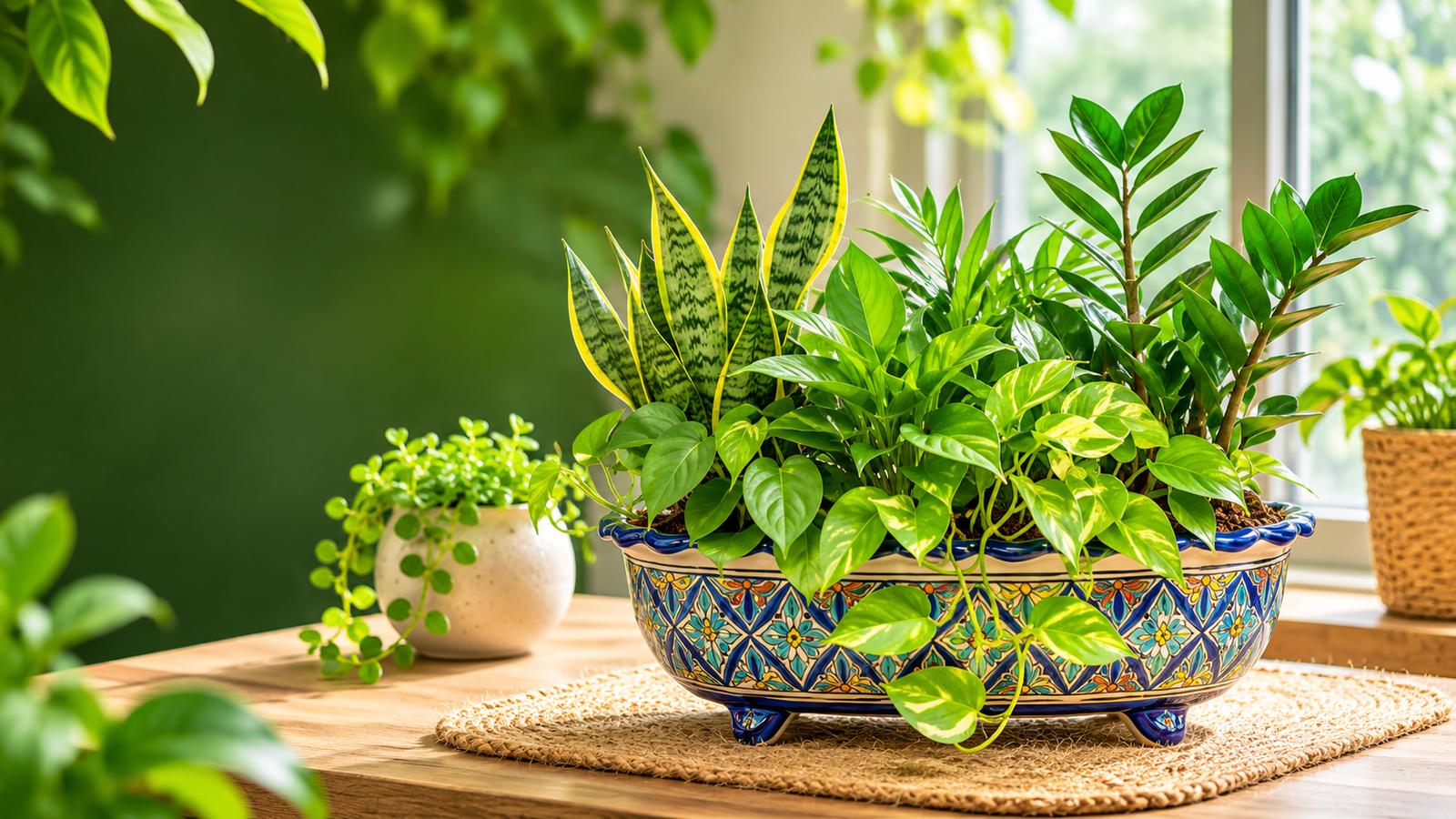
Place a Snake Plant or ZZ Plant on the floor.
Add a medium-sized Syngonium or Peace Lily on a decorative stand.
Keep a Money Plant in a hanging planter or on a shelf.
Use a Spider Plant to add variety and cascading foliage.
Add a Jade Plant near a bright window.
Use different pot shapes, heights and textures to create a balanced arrangement.
Choose plants with similar light and watering requirements when grouping them together.
Frequently Asked Questions
Which indoor plants are easiest for beginners?
Money Plant, Snake Plant, ZZ Plant and Spider Plant are popular beginner-friendly options because they are relatively adaptable and do not require complicated care.
Which indoor plants can tolerate low light?
Snake Plant, ZZ Plant and Money Plant can tolerate lower-light conditions. Syngonium and Aglaonema are also worth considering, depending on the variety and available light.
How often should I water indoor plants?
There is no universal watering schedule. Check the soil and consider the plant type, pot size, temperature, humidity and light conditions before watering.
Can indoor plants grow without sunlight?
Plants need light to grow. If natural light is unavailable, suitable artificial grow lights can help support their growth.
Which indoor plants can I propagate at home?
Money Plant, Syngonium, Spider Plant, Jade Plant and Snake Plant are popular choices for home propagation. Each requires a slightly different method.
Is monsoon a good time to propagate indoor plants?
Monsoon humidity can support propagation for many plants. However, ensure good drainage and airflow, and avoid overwatering to reduce the risk of rot.
Start Your Indoor Gardening Journey with Vanam
You don’t need a large garden, expensive equipment or years of experience to enjoy indoor plants. Start with a few easy-care varieties, understand their requirements and gradually build your collection.
And once your plants grow well, you can even use propagation to create new plants from the ones you already own.
At Vanam House of Plants, we believe every home has a garden waiting to happen. Explore gardening essentials, learn practical plant-care techniques and discover how easy it can be to bring more greenery into your everyday life.
Start with one plant. Let your indoor garden grow!